BRISKET FLAT Smoked Low and Slow with Coffee Rub
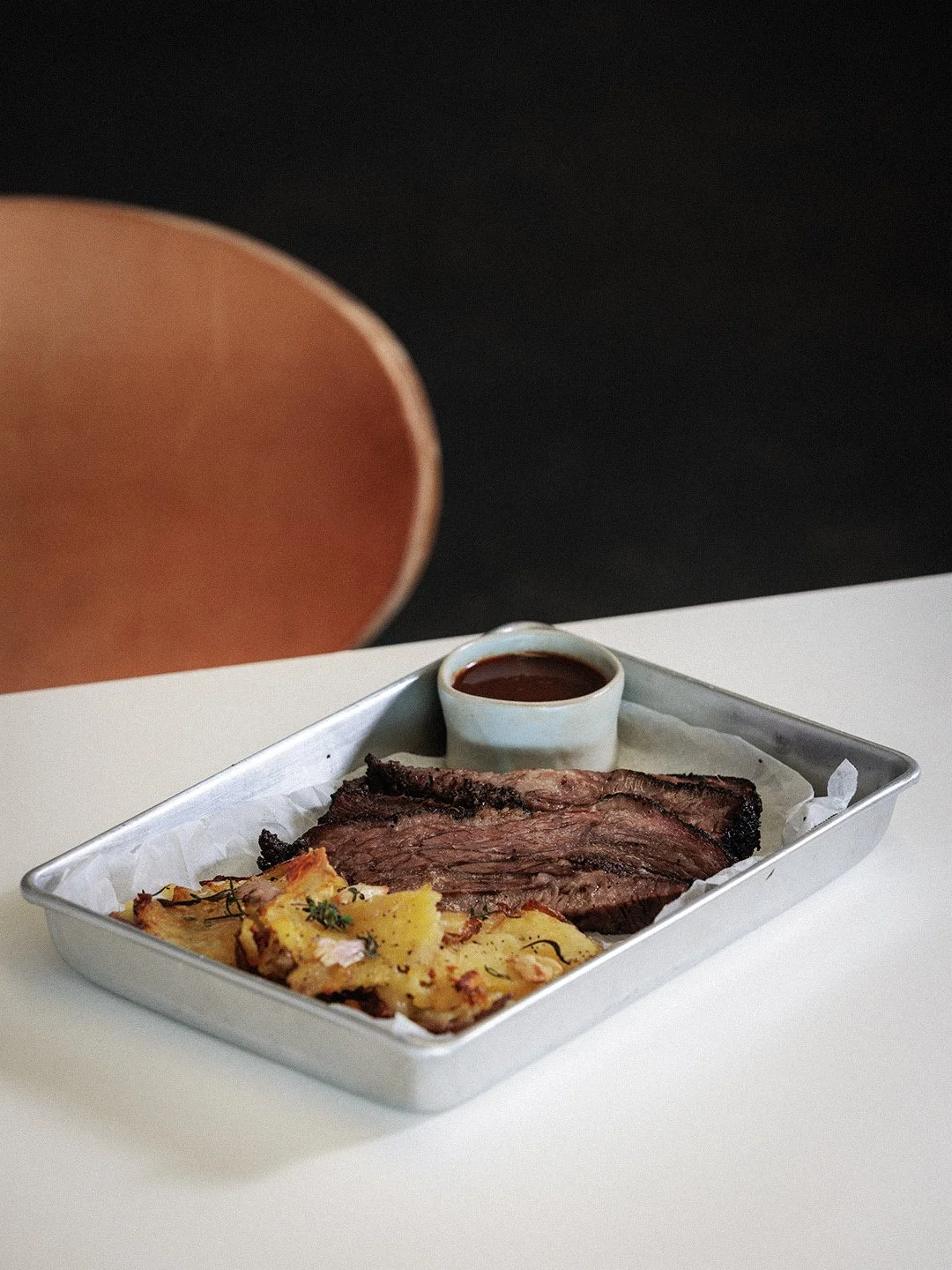
Brisket is the long game. That is why it is worth playing. The flat cut is the leaner, more uniform end of the brisket. It takes smoke well, holds its shape through a long cook, and slices cleanly when you get the temperature right.
The coffee rub is not there to make it taste like coffee. It is there for the bark. Ground coffee deepens the crust, adds a subtle bitterness that balances the fat, and gives you a colour on the outside that looks like it has been cooking all day. Because it has.
The target is simple: low heat, consistent smoke, patience. The stall will come. The internal temperature will sit at around 70 degrees C for what feels like too long. Push through it. Wrap the brisket in butcher paper at that point and keep going. The result on the other side of the stall is worth every minute.
This recipe works on an offset smoker, a kettle BBQ with a snake coal setup, or a campfire pit with a grate and a foil tent. The principle is the same across all three: 110 to 130 degrees C, hardwood smoke, and time.
AT A GLANCE
Serves 6 to 8
Prep Time 20 minutes (plus overnight dry brine)
Cook Time 8 to 12 hours depending on size Fire Setup Indirect low heat, hardwood smoke
Smoker Temp 110 to 130 degrees C throughout
Target Internal Probe tender at 93 to 96 degrees C
Wood Post oak, hickory, or ironbark
Difficulty Advanced. Time and temperature discipline required.
INGREDIENTS:
THE BRISKET
2 to 2.5 kg Brisket flat, fat cap trimmed to 6 mm
2 tbsp Flaky sea salt (for overnight dry brine)
INGREDIENTS:
COFFEE RUB
2 tbsp Finely ground espresso coffee
2 tbsp Coarse cracked black pepper
1 tbsp Flaky sea salt
1 tbsp Brown sugar
1 tsp Smoked paprika
1 tsp Garlic powder
1 tsp Onion powder
1/2 tsp Cayenne pepper
1/2 tsp Ground cumin
INGREDIENTS:
THE SPRITZ
150 ml Apple cider vinegar
150 ml Water
Combined in a spray bottle
METHOD 01.
DRY BRINE OVERNIGHT
The night before, trim the fat cap on the brisket flat to an even 6 mm. Any thicker and it will not render fully. Any thinner and you lose the protection it provides during the long cook.
Season the brisket generously all over with flaky salt, pressing it into the surface.
Place on a wire rack over a tray, uncovered, in the fridge overnight. The salt draws moisture to the surface, which then reabsorbs, seasoning the meat deeply and drying the exterior for a better bark.
Do not skip the overnight dry brine. It is the single biggest difference between a good brisket and a great one.
02. APPLY THE COFFEE RUB
Remove the brisket from the fridge 45 minutes before cooking.
Combine all rub ingredients in a bowl and mix well.
Apply generously to all surfaces of the brisket, pressing the rub firmly into the meat. The rub should cover every surface evenly.
Set aside at room temperature while you prepare the fire.
Apply the rub no more than 30 minutes before it goes on the smoker. Applied too early, the salt in the rub will draw moisture and make the bark wet rather than dry.
03. SET UP THE FIRE AND SMOKE
Target a steady 110 to 130 degrees C in your smoker or kettle. For a kettle BBQ, use a snake coal setup with hardwood chunks placed at the start of the snake. For an offset, build a small, hot fire and let it settle before adding the brisket. Use post oak, hickory, or ironbark for the smoke. Avoid fruit woods for brisket: they are too light for the coffee rub.
Temperature consistency matters more than peak heat. A steady 120 degrees C for 10 hours is better than swings between 100 and 150.
04. SMOKE THE BRISKET
Place the brisket fat side up on the grate, away from direct heat. Close the lid and leave it.
After the first 3 hours, begin spritzing every 45 to 60 minutes with the apple cider vinegar and water mix. The spritz keeps the surface moist, helps the bark set without burning, and adds a subtle acidity that works with the coffee rub.
Only open the lid to spritz. Every time you lift the lid you lose heat and smoke. Keep the spritz quick.
05. PUSH THROUGH THE STALL
At around 70 degrees C internal temperature, the brisket will stall. The temperature will plateau and may sit there for 1 to 3 hours. This is normal. It is caused by evaporative cooling as moisture leaves the meat.
When the stall hits, wrap the brisket tightly in two layers of unwaxed butcher paper and return it to the smoker. The wrap traps heat and moisture and pushes the brisket through the stall.
Use butcher paper, not foil. Foil traps too much steam and softens the bark. Butcher paper breathes just enough to keep it intact.
06. PROBE FOR DONENESS
Continue cooking until the internal temperature reaches 93 to 96 degrees C. At this point, probe the thickest part of the flat with a thermometer or skewer. It should slide in with almost no resistance, like pushing into room temperature butter. Temperature is a guide. Feel is the confirmation.
Do not pull the brisket based on temperature alone. A brisket that probes tight at 95 degrees C needs more time. One that probes like butter at 93 degrees C is ready.
07. REST
Remove the brisket from the smoker, still wrapped, and rest it in a dry cooler or warm oven at 65 degrees C for a minimum of 1 hour, and up to 3 hours. The rest allows the juices to redistribute and the collagen to finish converting. A properly rested brisket slices cleanly and holds its moisture. A rushed one falls apart and runs dry.
A longer rest is almost always better. A brisket held at 65 degrees C for 2 to 3 hours will be noticeably better than one rested for 30 minutes.
08. CARVE AND SERVE
Unwrap the brisket and transfer to a clean board. Using your Thomson Knife Slicer, carve the flat against the grain into slices 8 to 10 mm thick. The long, thin blade of the Slicer is built for this: a single drawing stroke per slice, no sawing, no pressure. The blade length covers the full width of the flat in one pass.
Arrange the slices on a board, pour any resting juices from the butcher paper over the top, and serve immediately.
Identify the grain direction before you start cutting. On a brisket flat, the grain runs lengthways. Cut across it, not with it.
SERVE WITH
White bread or brioche rolls to build into sandwiches with the slices. Pickled red onion and dill pickles to cut through the richness. A simple coleslaw. Burnt end baked beans if you have the point cut as well. Or just a potato bake.
Cold lager or a bold Shiraz.
Eat it outside, standing at the board.
THE RIGHT KNIFE
Brisket is where the Slicer earns its reputation. The long, thin blade covers the full width of the flat in a single drawing stroke. No sawing. No pressure. No tearing the bark you spent 10 hours building. The Slicer is the last tool you use on a brisket and the most important one.
BEST VALUE Stainless Slicer + Two Steak Knives $380 (Limited time only)
AUD Or choose your Slicer individually:
Slicer - Forged Finish · $365 AUD
Classic Chef's Slicer - Carbon Steel · $300 AUD
Classic Chef's Slicer - Stainless Steel · $330 AUD