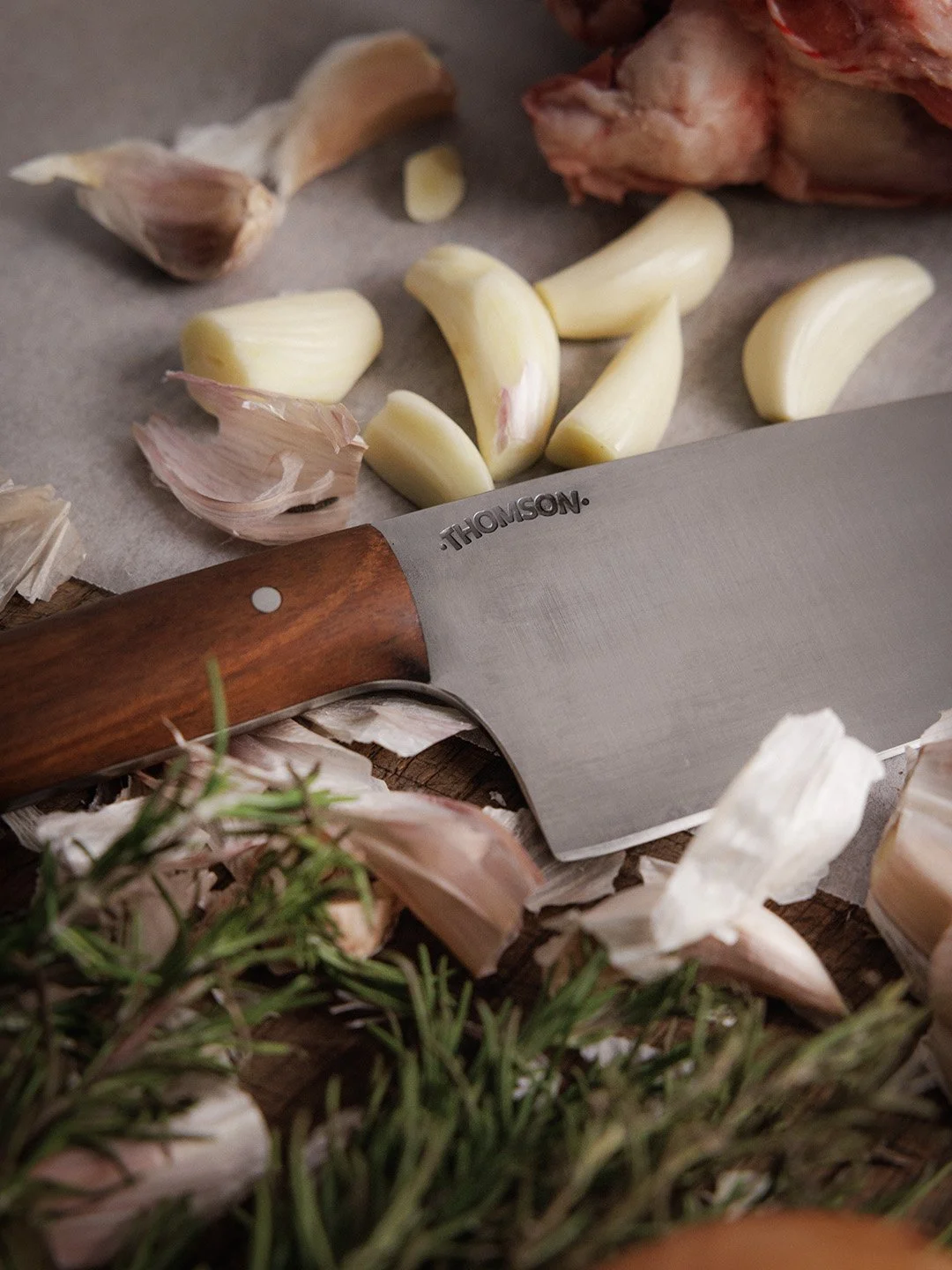
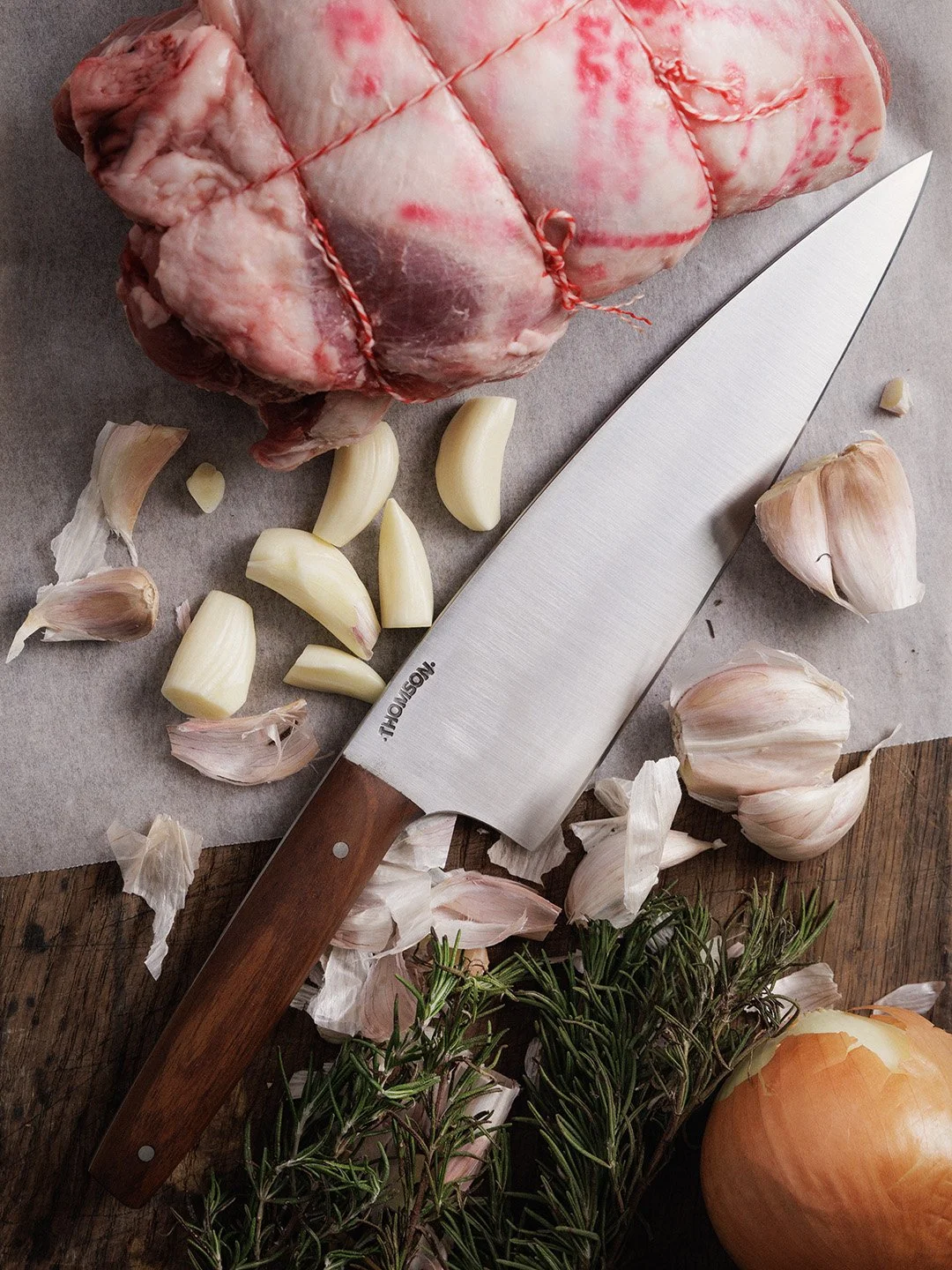
Slow cooked lamb with roast veg
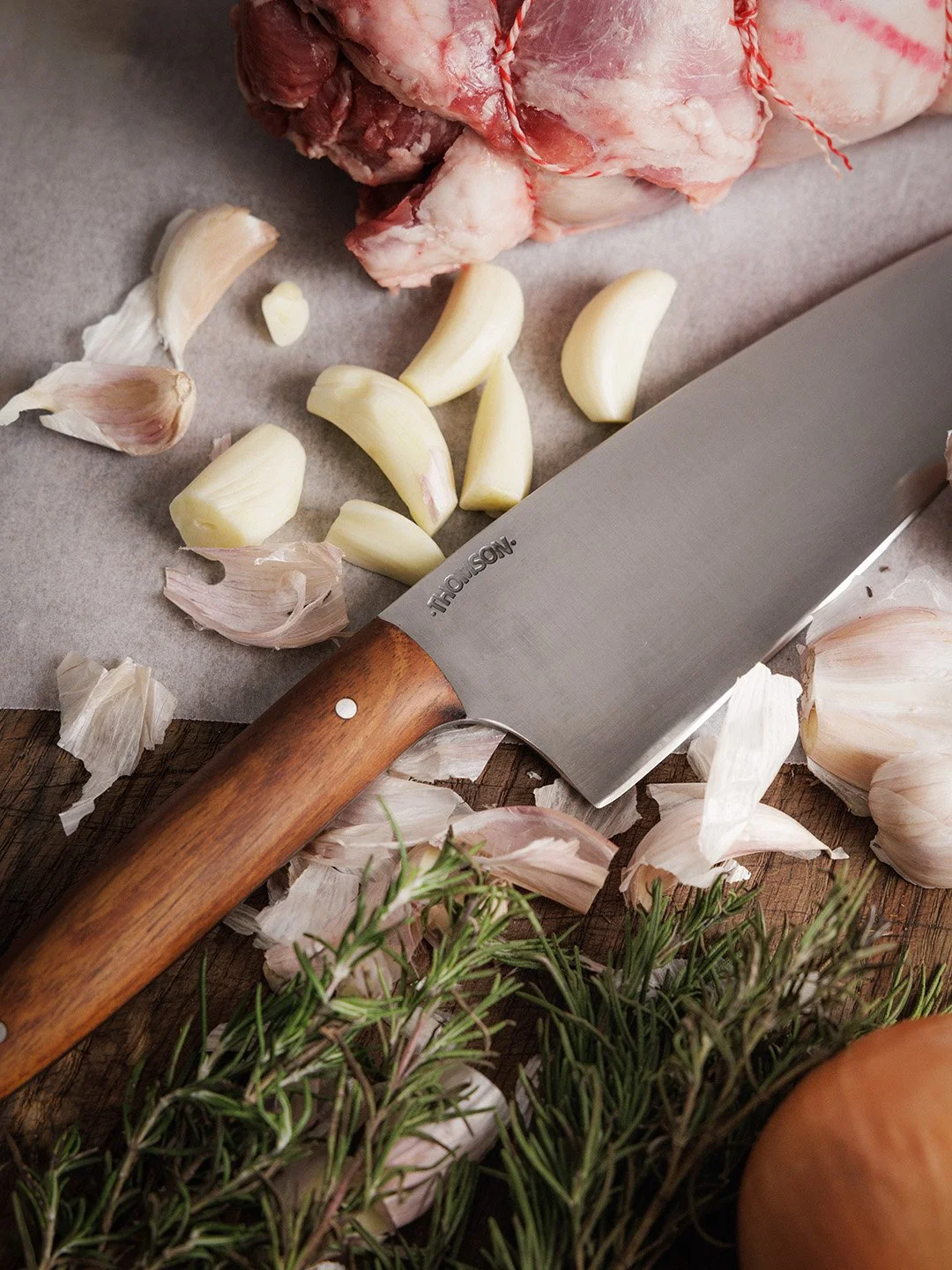
Some cooks reward patience. This is one of them. A lamb shoulder cooked low and slow in a sealed Le Creuset is one of the most forgiving and rewarding things you can put over a fire. The collagen in the shoulder breaks down over hours into a rich, silky jus. The garlic softens until it is almost sweet. The onion dissolves into the base. By the time the lid comes off, the meat pulls apart with nothing more than a spoon. The pumpkin and beetroot are roasted separately and added in the final hour. They take on the jus and hold their shape just enough to give the dish something to work against. The result is a complete meal from a single pot: deep, earthy, and built for eating outside. This recipe works on a kettle BBQ with the lid down and indirect heat, or over a campfire with a camp oven and coals on the lid. The principle is the same in both cases: consistent low heat, a tight seal, and time.
AT A GLANCE
Serves 4 to 6
Prep Time 30 minutes
Cook Time 4 to 5 hours
Fire Setup Indirect low heat, lid on throughout
Temp Target 140 to 160 degrees C inside the pot
Target Internal Lamb pulls apart easily at 90 to 95 degrees C
Vessel Le Creuset or heavy cast iron casserole with tight lid
Difficulty Easy.
Time does the work.
INGREDIENTS:
THE LAMB
1.8 to 2 kg Bone-in lamb shoulder
1 tbsp Flaky sea salt
1 tsp Cracked black pepper
1 tbsp Olive oil
6 sprigs Fresh rosemary
6 sprigs Fresh thyme
VEG
600 g Kent or butternut pumpkin, cut into large wedges, skin on
2 Medium beetroot, scrubbed and quartered
2 tbsp Olive oil
1 tsp Flaky sea salt
1 tsp Ground cumin
1 tsp Smoked paprika
INGREDIENTS:
GARLIC ONION JUS
1 whole Garlic bulb, cloves peeled and left whole
2 Brown onions, peeled and quartered
2 Shallots, peeled and halved
250 ml Dry white wine
500 ml Good quality chicken or lamb stock
2 tbsp Olive oil
1 tbsp Red wine vinegar
1 tsp Caster sugar
METHOD
01. SEASON AND REST THE LAMB
Remove the lamb shoulder from the fridge 45 minutes before cooking. Pat it completely dry with paper towel. Season generously all over with flaky salt and cracked pepper, pressing the seasoning into the surface. Set aside at room temperature while you prepare the fire and the vegetables.
A dry surface is essential for a good sear. Any moisture will steam the meat rather than colour it.
02. SET UP THE FIRE For a kettle BBQ: bank the coals on both sides of the grill, leaving the centre clear for indirect cooking. Target a lid temperature of 160 degrees C. For a campfire: build a good coal base and set the camp oven over it with additional coals on the lid to create an even oven environment. Preheat the Le Creuset or casserole directly over the heat.
Consistent temperature over a long cook matters more than peak heat. Add coals gradually rather than all at once.
03. SEAR THE LAMB Add olive oil to the preheated Le Creuset. Sear the lamb shoulder on all sides over direct heat for 3 to 4 minutes per side until deeply browned. Do not rush this step. The colour you build here becomes the base of the jus. Remove the lamb and set aside briefly.
If the pot is not hot enough, the lamb will stew rather than sear. You want an immediate, aggressive sizzle on contact.
04. BUILD THE JUS BASE In the same pot, add the quartered onions, shallots, and whole peeled garlic cloves. Cook over direct heat for 4 to 5 minutes, stirring occasionally, until the onion begins to soften and colour at the edges. Pour in the white wine and let it reduce by half, scraping up any browned bits from the base of the pot. Add the stock, red wine vinegar, and sugar. Stir to combine.
The browned bits on the base of the pot are where the flavour lives. Do not skip the deglazing step.
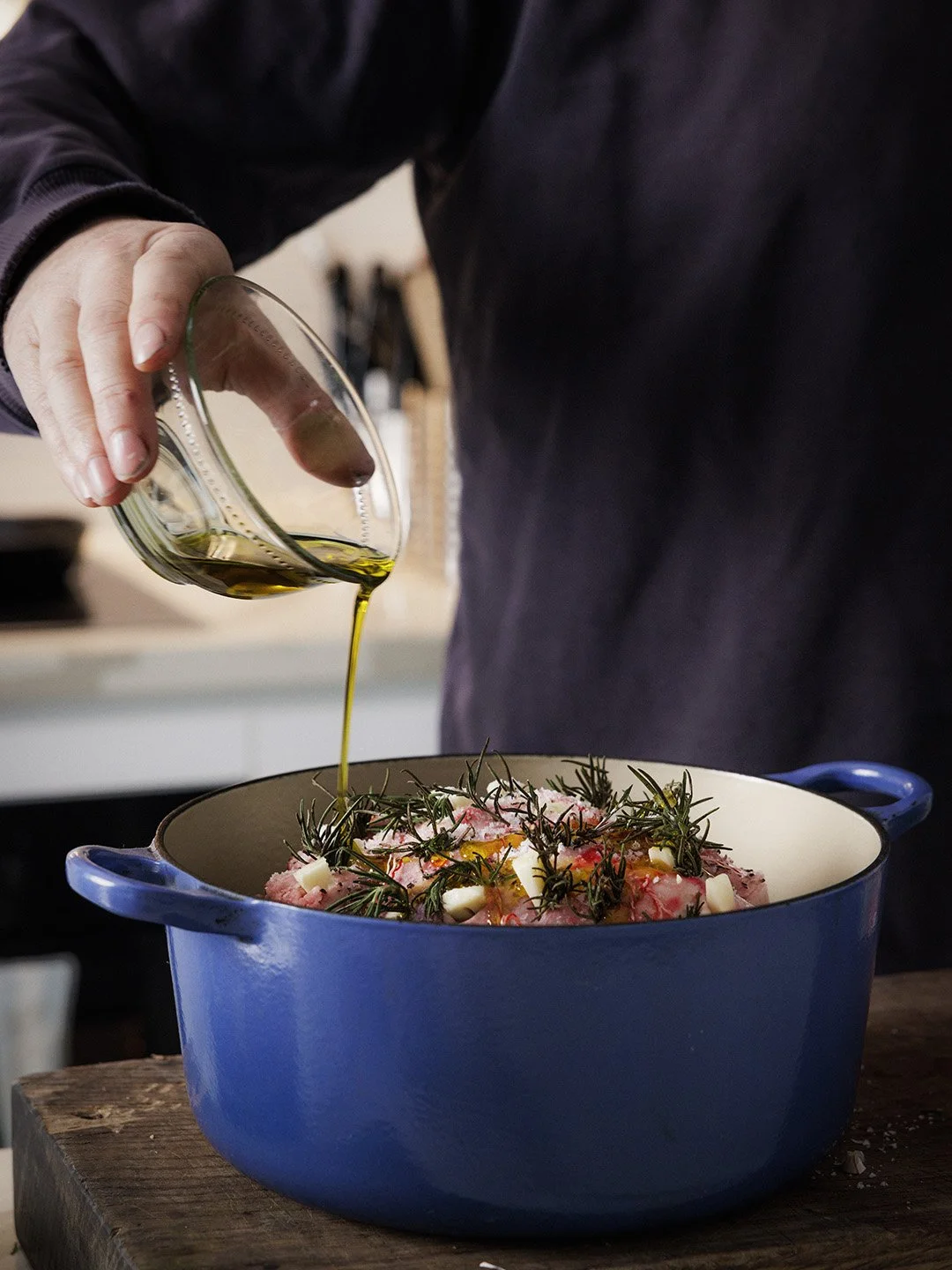
05. SLOW COOK THE LAMB Return the seared lamb shoulder to the pot, nestling it into the jus base. Tuck the rosemary and thyme sprigs around and over the meat. Drizzle with olive oil. Place the lid on tightly and move the pot to indirect heat. Cook for 3.5 to 4 hours, checking the coal or fire temperature every 45 minutes and adjusting as needed. The lamb is ready when it pulls apart easily with two forks or a spoon.
Do not lift the lid more than necessary. Every time you open it, you lose heat and add 15 minutes to the cook.
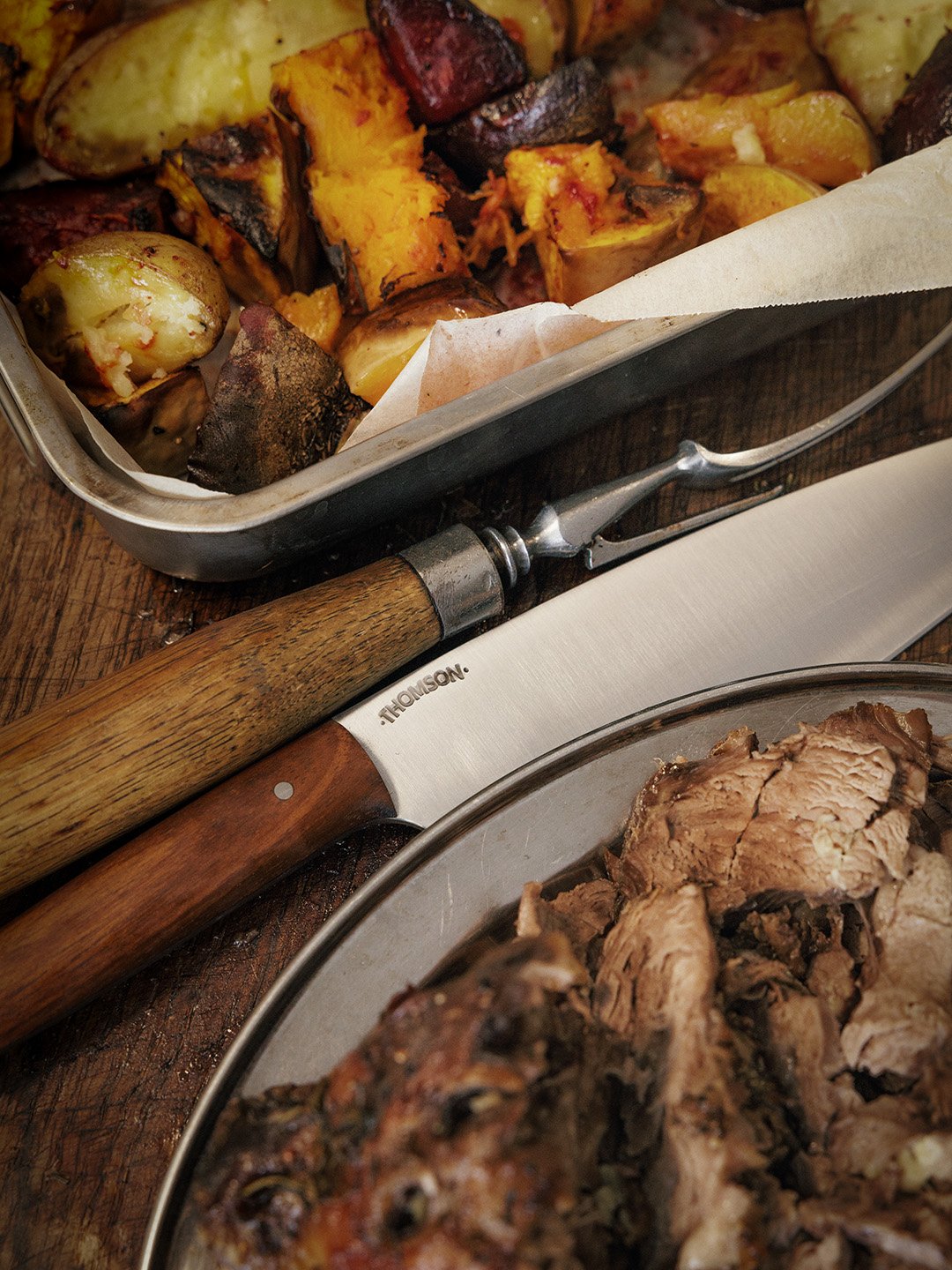
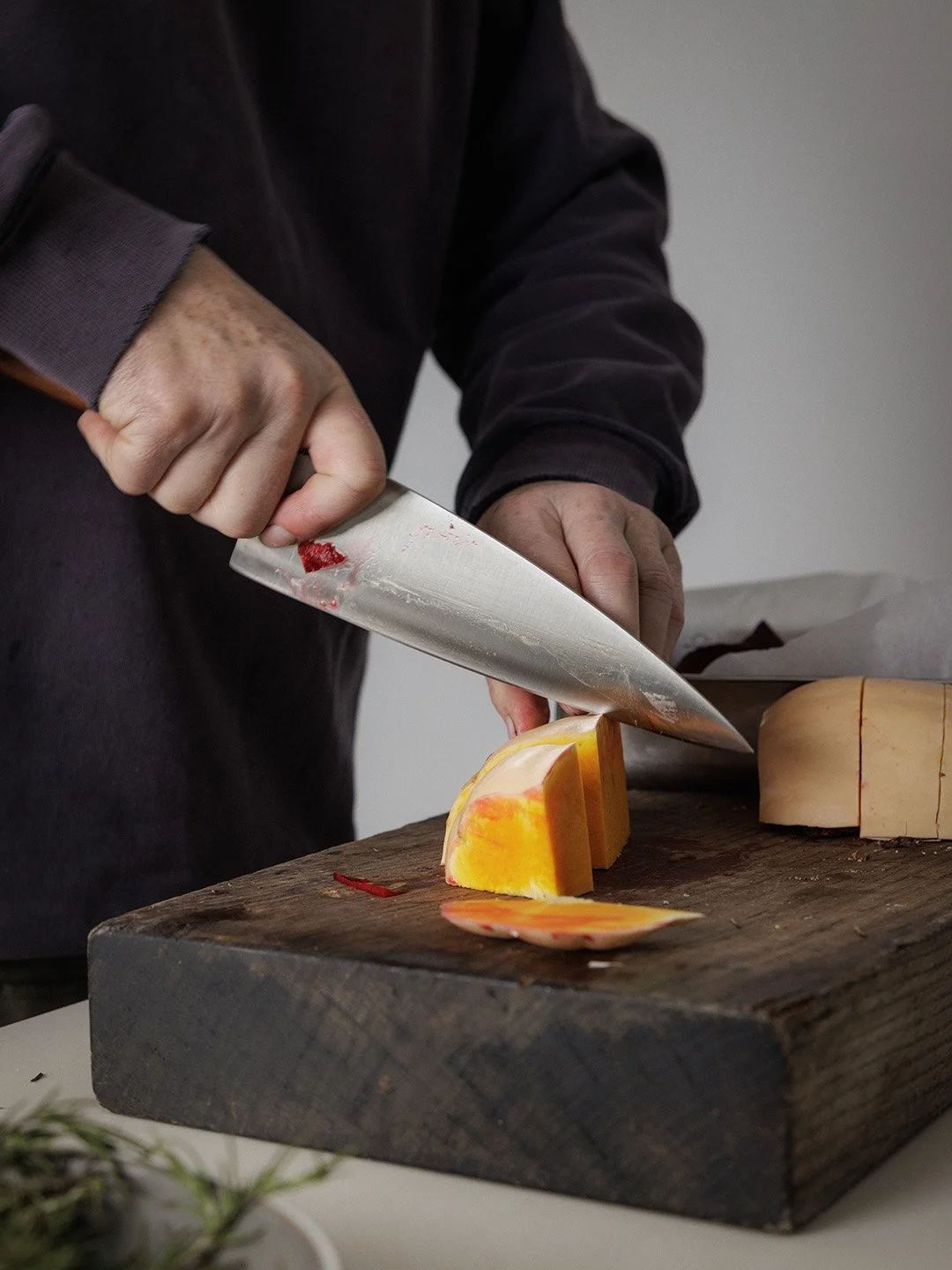
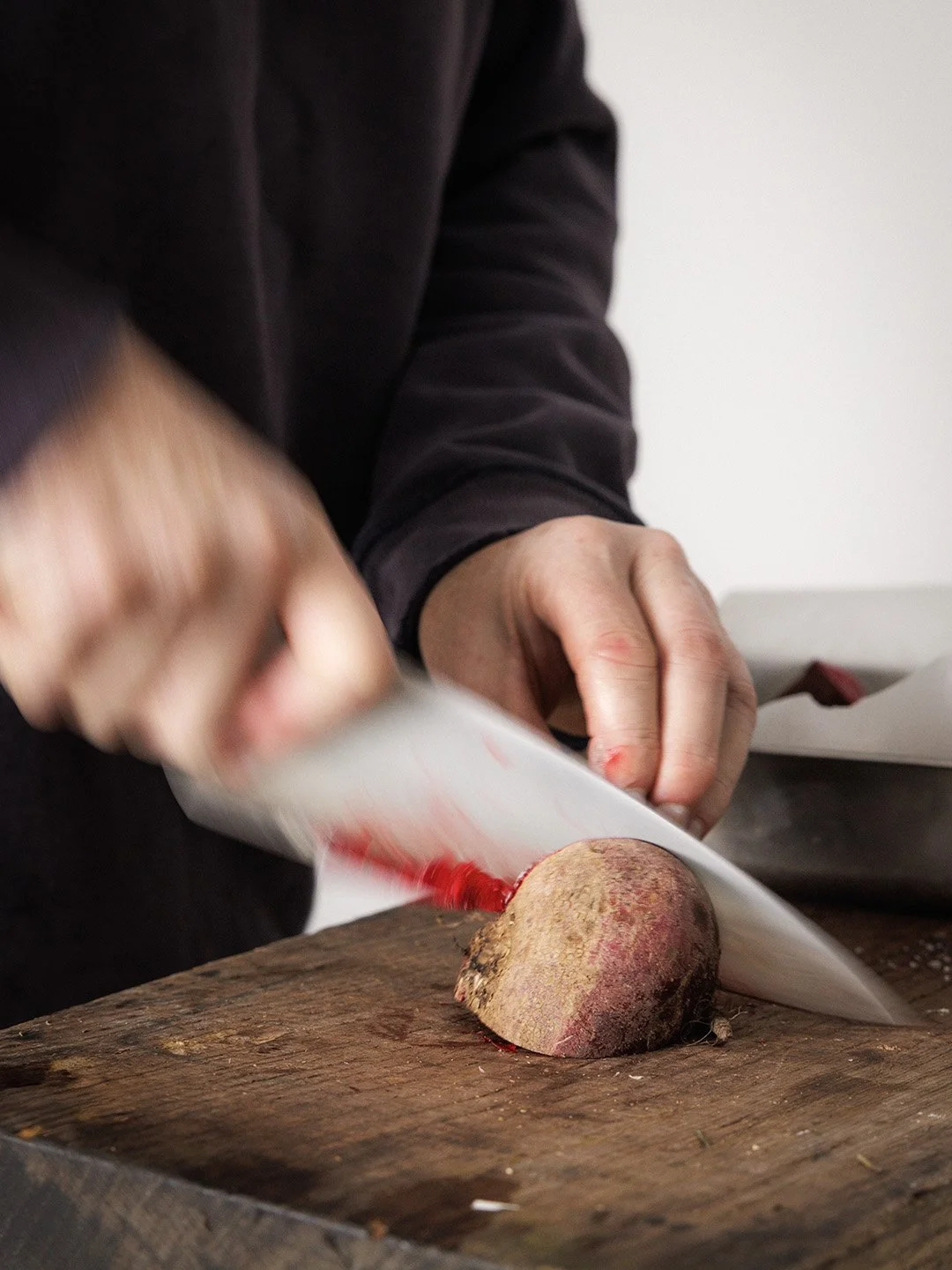
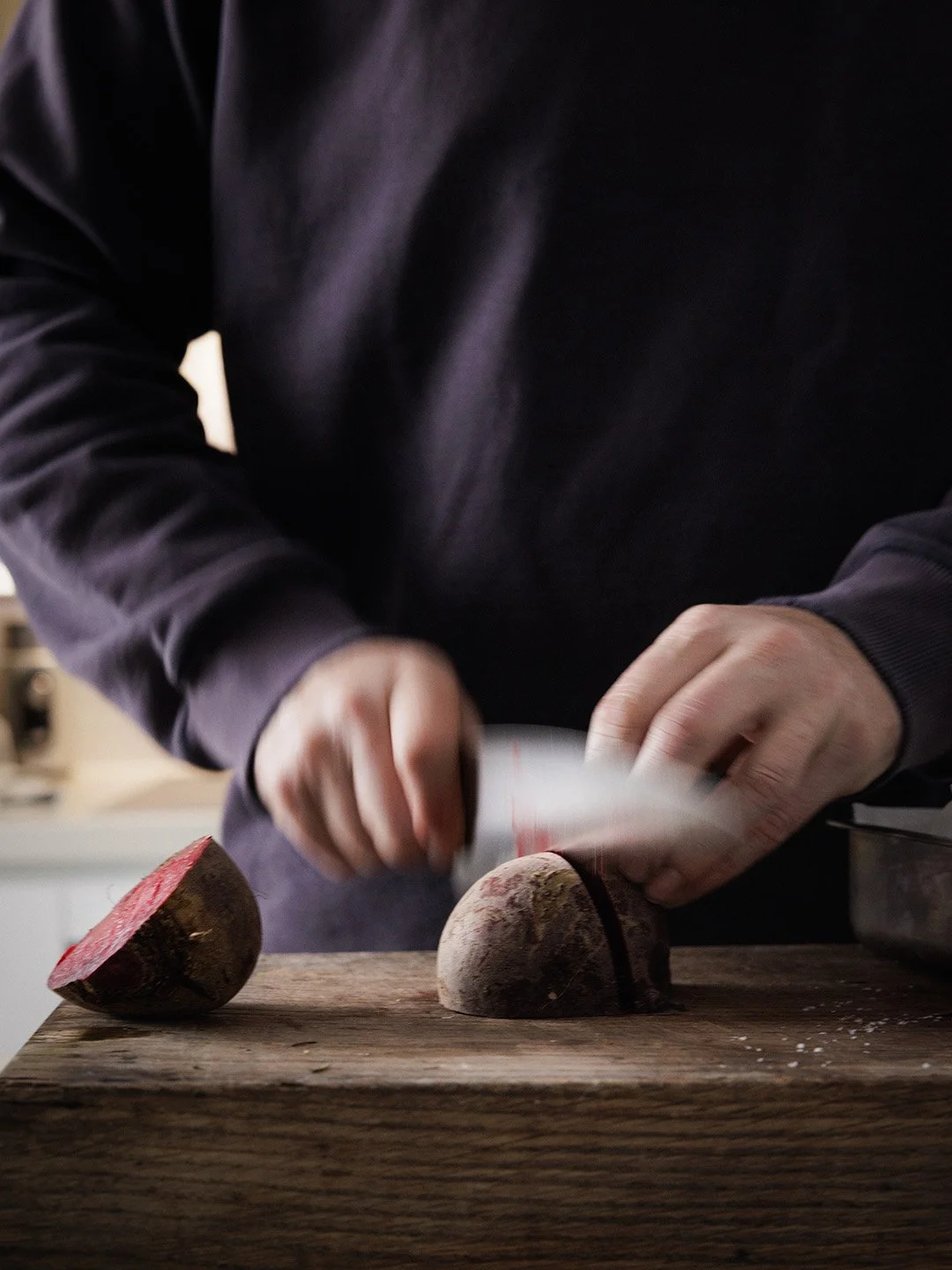
06. ROAST THE PUMPKIN AND BEETROOT About 90 minutes before the lamb is due to finish, toss the pumpkin wedges and beetroot quarters in olive oil, salt, cumin, and smoked paprika. Add them directly to the pot around the lamb, pressing them into the jus. Replace the lid and continue cooking for the remaining time. The vegetables will absorb the jus and soften without losing their structure entirely.
Cut the pumpkin into large wedges rather than small pieces. Smaller pieces will break down completely over 90 minutes.
07. REST AND REDUCE THE JUS Remove the lamb from the pot and rest it, covered loosely, for 15 minutes. Lift out the vegetables and set aside. Place the pot back over direct heat and reduce the jus for 8 to 10 minutes until it thickens slightly and coats the back of a spoon. Taste and adjust seasoning with salt and a small splash of red wine vinegar if needed.
The jus should be rich and glossy, not watery. If it needs more body, a small knob of cold butter stirred in off the heat will finish it.
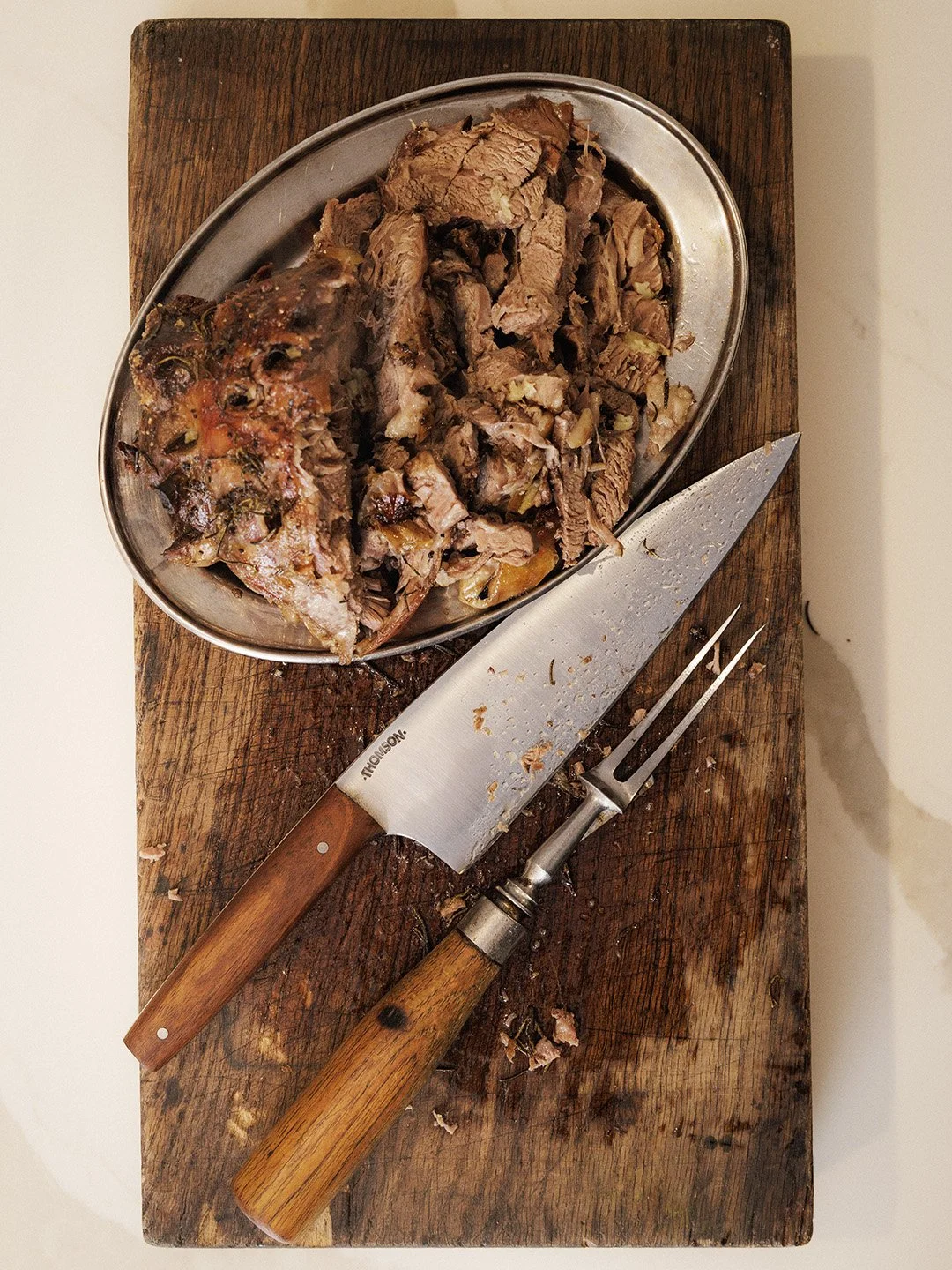
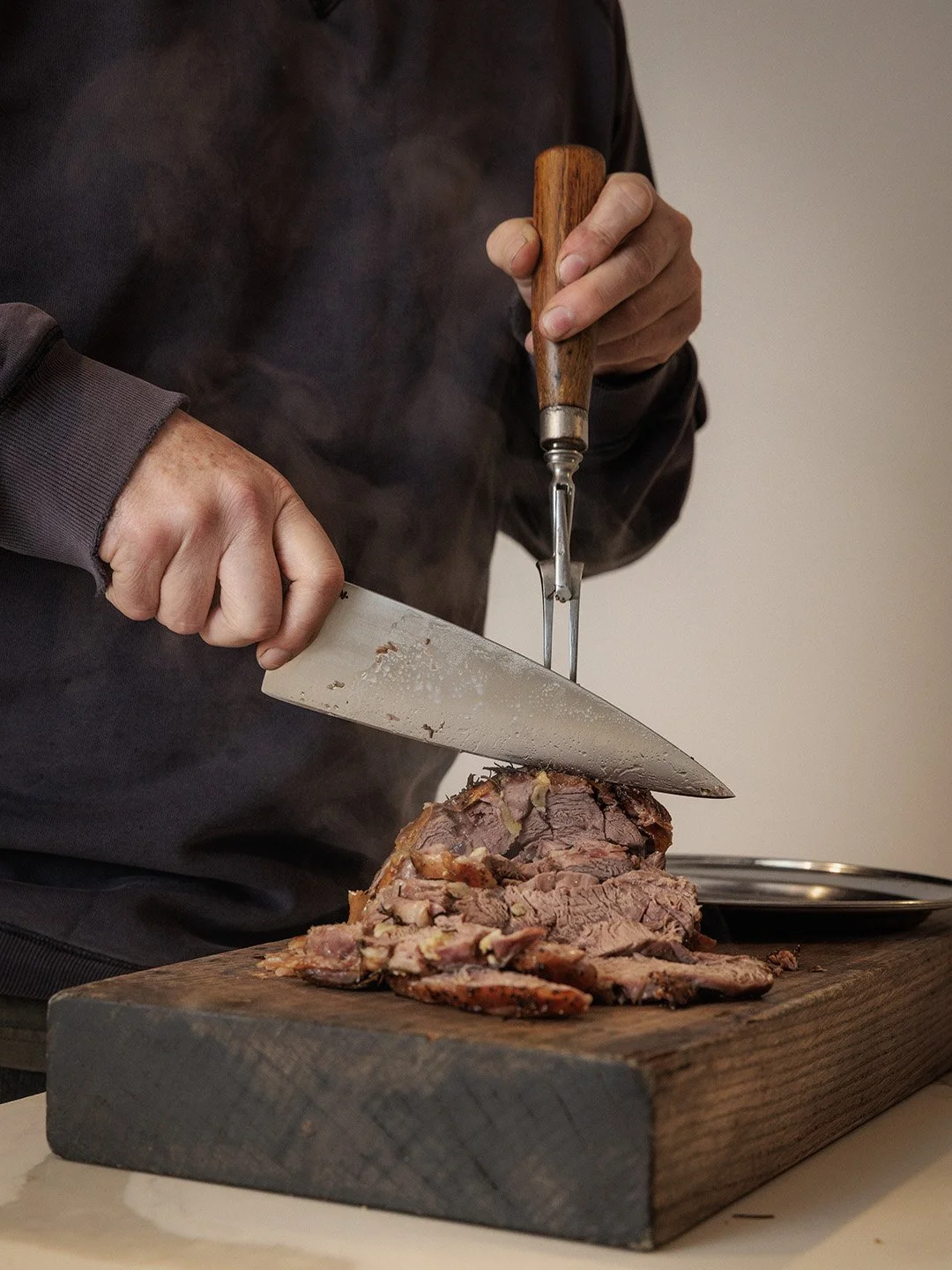
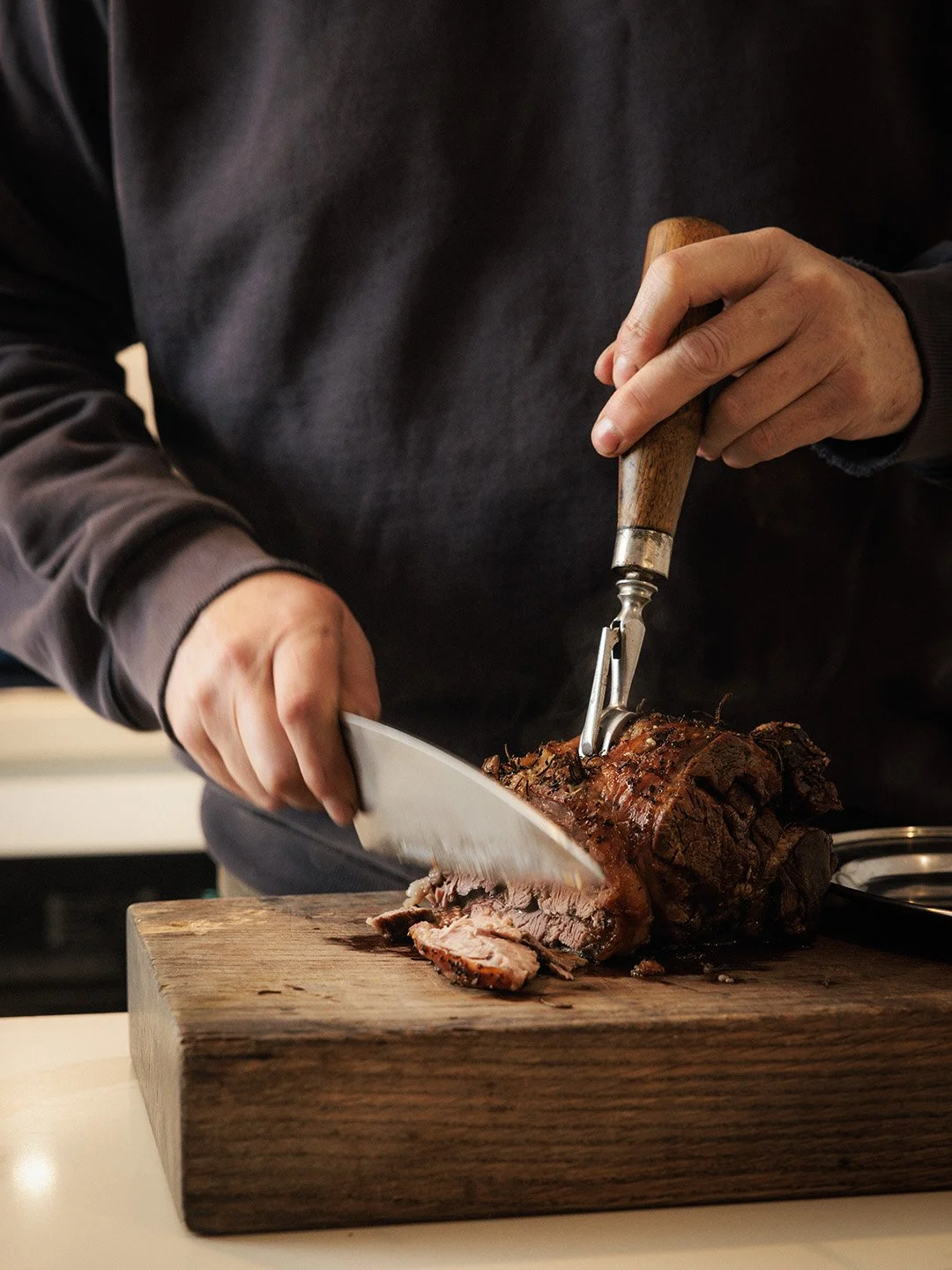
08. CARVE AND SERVE Using your Thomson Knife Slicer, carve the lamb shoulder into thick slices where the meat holds together, then pull the rest apart with your hands or two forks. The long, thin blade of the Slicer lets you work cleanly around the bone and through the tender meat without tearing. Arrange the carved lamb on a board or in the pot alongside the pumpkin and beetroot. Spoon the reduced jus generously over everything. Finish with torn parsley, a drizzle of extra virgin olive oil, and flaky salt.
Serve directly from the Le Creuset at the table. It holds heat well and the presentation does the talking.
SERVE WITH
Crusty sourdough or flatbread to mop up the jus. A simple green salad dressed with lemon and olive oil to cut through the richness. A full-bodied Shiraz or Grenache. This is a meal that improves with a second glass and a slower pace.
THE RIGHT KNIFE
A slow-cooked shoulder does not need much from a knife during the cook. The prep is straightforward: peeling garlic, quartering onions, cutting pumpkin and beetroot. Any good chef's knife handles that. Where the Slicer earns its place is at the carve. The long, thin blade lets you work cleanly around the bone and through the tender, yielding meat in single, controlled strokes. No tearing. No dragging. Just clean slices that hold together on the board.
Slicer - Forged Finish · $365 AUD